
Kylo KPV is a short peptide made of three amino acids: lysine, proline, and valine. It’s a fragment of a larger natural molecule called alpha-MSH, and it’s studied in laboratory settings for its role in inflammation-related pathways. That’s the plain-language answer, and it’s the one we’ll build on throughout this guide.
Here’s why it matters. Peptide research moves quickly, and clear information is hard to find. Whether you’re comparing sources or just learning the basics, you deserve straightforward explanations without the hype. If you’re ready to see a specific research-grade option, Kylo KPV is available for laboratory use only, and like every KPV product, it is not intended for human consumption or medical use.
Below, we answer the questions researchers ask most: how KPV is thought to work, where the existing research has focused, what storage and handling look like, and what to check before you buy. We keep the language simple and the claims honest. Think of it like building a wardrobe with a strong confidence mindset: you start from clear fundamentals, so every choice that follows feels informed and entirely your own.
What KPV Peptide Means in Plain Language
Think of a peptide as a tiny string of building blocks. Each block is an amino acid, and when a handful of them link together in a specific order, you get a peptide. KPV is one of the shortest ones around: just three amino acids, lysine (K), proline (P), and valine (V), strung together in that order.
It isn’t invented from nothing, either. KPV is a fragment of alpha-MSH, a larger signaling molecule your body naturally makes. Researchers noticed that this little tail end seemed to carry much of the molecule’s interesting activity, so they began studying it on its own. Much of that interest centers on inflammation-related pathways, which are the chain reactions cells use to signal “something’s irritated here.”
Here’s a quick glossary to keep handy as you read on:
- Peptide
- A short chain of amino acids, smaller than a full protein.
- Alpha-MSH
- A naturally occurring signaling molecule from which KPV is derived.
- Anti-inflammatory pathway
- A series of cell signals that can dial inflammation up or down.
- In vitro vs. in vivo
- In vitro means studied in cells in a dish; in vivo means studied in a living organism.
- Research-grade
- Material made and labeled for laboratory study, not for human use.
Now for the honest part, because you deserve realistic expectations. Most of what we know about KPV comes from lab and animal studies. Those early findings are genuinely intriguing, but they are not the same as proven results in people. A promising result in a dish is a starting point, not a finish line, and that gap between “interesting” and “established” is worth holding onto as you keep reading.
How KPV Works: What Researchers Have Observed So Far
Think of your cells as a busy room where messages are constantly being passed along. Some of those messages say “something’s wrong, sound the alarm.” That’s inflammatory signaling, and it’s a normal, necessary part of how the body responds to stress or injury. The trouble starts when the alarm keeps ringing long after the situation has passed.
Researchers have been curious about KPV because it appears to help turn the volume down on that alarm in laboratory settings. KPV is a small fragment of a larger signaling molecule called alpha-MSH, which the body already makes. In published cell studies, KPV has been observed reducing the activity of a pathway known as NF-kB, often described as a master switch that tells cells to ramp up inflammatory messengers. Fewer of those messengers means a quieter, less reactive response in the dish.
Another interesting observation is size. Because KPV is so tiny, researchers have looked at whether it can enter cells and work from the inside, rather than only knocking on the door from the outside. Some preclinical work suggests it may do exactly that, though the details are still being mapped out.
Here’s the part worth holding onto: nearly all of this comes from cell cultures and animal models. That’s a valuable first step, but it’s a long way from knowing how any of it plays out in people. Mechanisms that look clear in a controlled dish can behave very differently in a living, complex body.
So when you read about how KPV “works,” it helps to hear it as “here’s what researchers have seen so far” rather than “here’s the final answer.” The picture is still being filled in, and that’s perfectly normal for a compound at this stage of study.
Where KPV Research Is Focused: Areas of Study
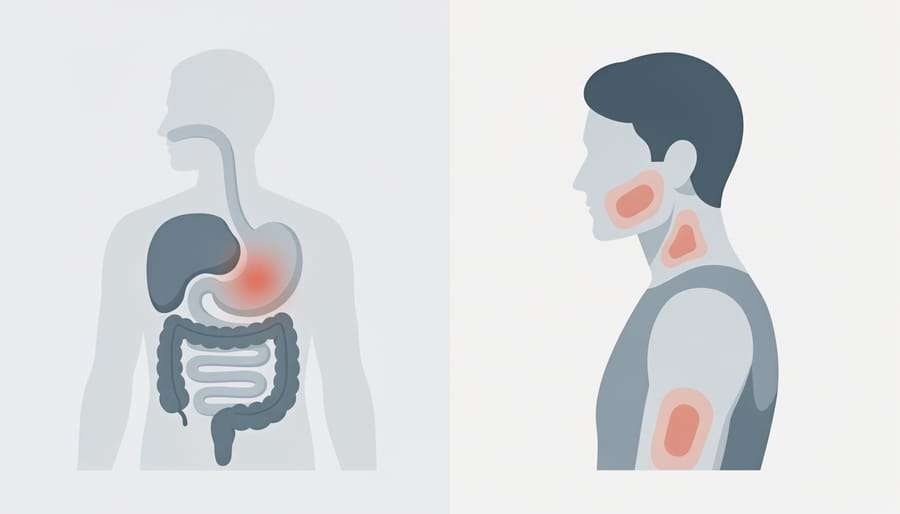
When people ask where KPV research actually lives, the honest answer is that it’s concentrated in a few focused areas, and almost all of it is still early-stage. Think of these as research directions, not treatments or promised results.
- Gut and digestive inflammation models: Lab and animal studies have looked at how KPV behaves in models of intestinal inflammation, with the evidence still preclinical.
- Skin-related inflammation studies: Researchers have examined KPV in skin cell and tissue models to understand its effect on inflammatory signaling, again largely at the cell and animal level.
- General inflammatory signaling: Some work explores how the peptide interacts with the pathways cells use to communicate inflammation, mostly in lab settings.
- Delivery and formulation questions: Scientists have also studied how KPV might be carried into tissues, which remains an exploratory topic.
Wait, a quick correction on formatting: the list above should read as plain items, so here it is cleanly:
- Gut and digestive inflammation models: studied in lab and animal settings, evidence still preclinical.
- Skin-related inflammation studies: explored in cell and tissue models, early-stage findings only.
- General inflammatory signaling: examined in the lab to understand how cells communicate, still being mapped.
- Delivery and formulation questions: researched to see how KPV reaches tissues, largely exploratory.
If you’re beauty-curious, the skin work is probably the area that caught your eye, and that makes sense. Skin is our largest organ, and inflammation is a big part of how researchers think about why skin behaves the way it does. That’s the whole reason it’s studied. It isn’t a promise of any cosmetic or health outcome, and nothing here suggests KPV will change how your skin looks or feels.
Across every one of these areas, the pattern is the same: interesting early signals, not settled answers. Keeping that in mind helps you read new headlines with calm, confident curiosity.
KPV Peptide FAQs for Researchers
Questions about KPV tend to come in waves, and no question is too basic. Here are plain answers to the ones researchers ask most, with a reminder that KPV is a research compound and this is educational information, not medical advice.
What is KPV, and what isn’t it?
KPV is a three-amino-acid peptide (lysine-proline-valine) derived from alpha-MSH and studied mostly in lab and animal models of inflammation. It isn’t an approved medicine, and early research findings don’t amount to proven human outcomes.
How is it different from other peptides?
Its tiny size is the big distinction, since many better-known research peptides are much longer chains. Researchers have focused on its connection to inflammatory signaling rather than on the broader activity of its parent molecule.
What forms does KPV appear in within studies?
Published research has described oral, topical, and injectable preparations, depending on the model being studied. These are research contexts only, and the form used in a study doesn’t tell you what’s appropriate for any person.
Is KPV an approved drug?
No. It’s sold and discussed as a research-use compound, so anyone with health questions should talk with a qualified professional instead of relying on online claims.
Beyond those four, two practical topics come up constantly: sourcing and storage.
On sourcing, quality documentation is your best friend. A reputable supplier should offer a certificate of analysis (often shortened to COA) showing purity testing, ideally from independent lab work you can actually read. Look for clear batch information and consistency between the label, the documentation, and the product. If a seller is vague, pushes big promises, or can’t produce paperwork, that’s useful information in itself. You deserve transparency, and asking for it is completely reasonable.
On storage and handling, the general principle is that peptides are delicate. They tend to be sensitive to heat, light, and moisture, so careful, clean handling matters, and the exact requirements depend on the specific product and supplier instructions. Follow the guidance that comes with what you have, and don’t assume one set of rules fits every peptide or every form.
It also helps to remember that general answers only go so far. Your circumstances, goals, and health history are your own, and a qualified professional can speak to them in ways a FAQ never can. It’s the same idea behind helping people own your confidencebuilt on choices that fit the individual rather than a one-size-fits-all formula.
Being a Savvy, Confident Reader of Peptide Claims
Here’s a little secret from the world of personal styling: the most confident people aren’t the ones who know everything. They’re the ones who ask good questions. That same instinct serves you beautifully when you’re sorting through peptide information online, and it echoes the heart of the client empowerment model: you stay in the driver’s seat.
Start by noticing the language. Words like “miracle,” “guaranteed,” or “doctors hate this” are marketing, not science. Then look for the evidence itself. Does a claim point to a peer-reviewed study you can actually find, or just vaguely mention “research”? Even when a study exists, check who it involved. Results from cells in a dish or from animals don’t automatically carry over to people, and honest sources say so plainly.
It also helps to read the fine print. Disclaimers, sourcing details, and who’s selling what can tell you a lot.
Finally, trust your gut. If something sounds too good to be true, pausing to question it isn’t being difficult. It’s a quiet form of self-care, and it’s always allowed.
So, here’s where we land. KPV is a tiny three-amino-acid peptide that researchers are still actively exploring, and the evidence, mostly from cell and animal studies, is still taking shape. That’s okay. Good questions don’t need tidy answers right away.
Asking carefully, checking sources, and staying curious about claims that sound too perfect are genuine strengths. Keep trusting that instinct, and when you need guidance tailored to your own situation, turn to qualified professionals who can look at the full picture with you.