
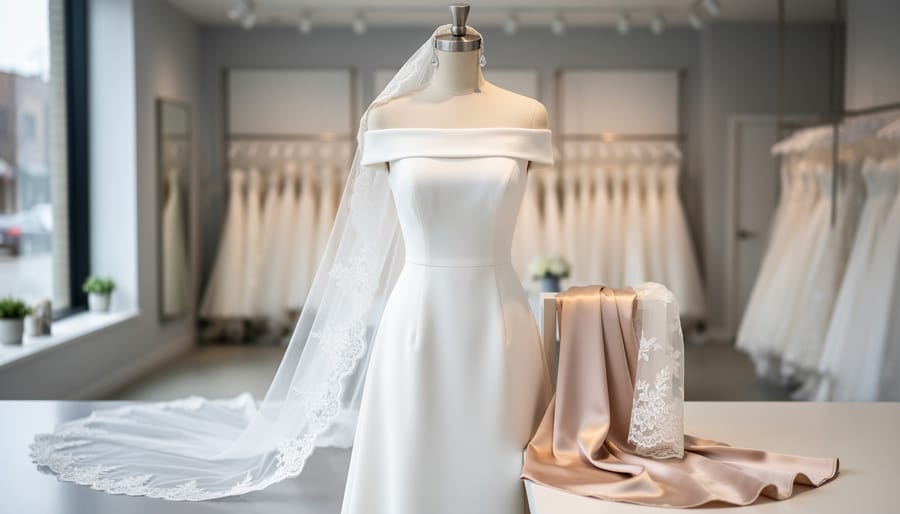
Accessorizing a simple wedding dress is about thoughtfully layering pieces that reflect your personality while letting your gown’s clean lines shine. The beauty of choosing a minimalist silhouette lies in the creative freedom it gives you: you have the perfect canvas to build a look that feels authentically yours, whether that means adding drama with a cathedral-length veil, texture with detachable sleeves, or sparkle through carefully chosen jewelry. For Canadian brides planning their 2026 weddings, this approach is especially empowering because you’re not bound by heavily embellished trends or prescriptive styling rules.
The key is working with what makes minimalist gowns so stunning: those off-the-shoulder necklines, clean draping, and low backs that define current bridal design. When you start with simplicity, every accessory becomes intentional. A corset bodice paired with a soft tulle skirt and lace-edged veil creates romance without overwhelming your frame. Overskirts add versatility for ceremony-to-reception transitions. Even a silk scarf draped just so can transform your entire aesthetic.
This guide walks you through the strategic styling decisions that will help you boost your confidence and create a complete bridal look. You’ll learn exactly which accessories complement specific necklines and silhouettes, how to balance proportion and scale, and the practical considerations unique to Canadian weddings, from outdoor prairie ceremonies to urban winter receptions. Simple doesn’t mean plain. It means purposeful.
What You’ll Need: Your Simple Dress Accessorizing Toolkit
Before you start layering pieces onto your simple wedding dress, gather a range of accessories to explore what resonates with you. Think of this as your styling toolkit, having options at hand means you can experiment, mix, and discover combinations that feel authentic rather than settling for the first thing you try.
Since minimalist gowns create space for personalization, you’ll want to consider accessories across several categories:
- Veils and headpieces, from cathedral-length veils edged in lace to delicate combs or floral crowns
- Jewelry pieces, earrings, necklaces, bracelets, and brooches that complement your neckline and dress silhouette
- Shoes, heels, flats, or boots that suit your dress length and the season
- Wraps or cover-ups, shawls, jackets, or capes for Canadian weather and temperature shifts
- Detachable extras, overskirts, sleeves, bows, and scarves for transforming your look between ceremony and reception
- Styling consultation or try-on support, professional guidance to help identify what feels most like you
The beauty of working with a simple dress is that it offers room for accessories without competing with heavy embellishment. Popular 2026 designs feature off-the-shoulder silhouettes, minimalist scoop necklines, clean draping, and low backs, all of which invite different accessory choices. Gathering these pieces ahead of time gives you permission to play, layer, and refine until you land on a combination that makes you feel confident and beautiful, not styled by trend alone.
Before You Begin: What to Consider First
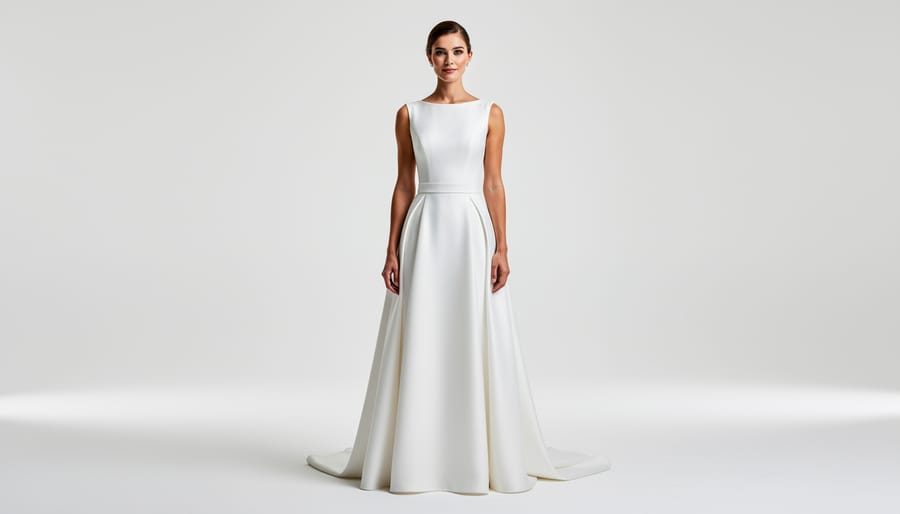
Before you start selecting accessories, pause and set yourself up for success. The beauty of a simple wedding dress lies in its clean lines and minimalist elegance, your goal is to enhance that foundation, not compete with it. If you find yourself layering on piece after piece, take a breath and remove something. Over-accessorizing can quickly overwhelm an off-the-shoulder silhouette or beautiful low back, turning an intentionally understated gown into visual clutter.
Equally important is ensuring comfort and mobility. You’ll be wearing these pieces for hours, so test everything by moving, sitting, and dancing. A cathedral-length veil edged in lace is stunning, but not if it restricts you or causes headaches. Pay attention to weight, fastenings, and how pieces feel against your skin.
Most crucially, trust your instincts over trends. If 2026’s popular add-ons like overskirts or detachable sleeves don’t resonate with you, skip them. Your personal style and body confidence matter more than what’s currently fashionable. If you’re feeling uncertain or stuck, that’s the moment to seek professional styling support, personalized dress consultations exist precisely to help you navigate these choices with expert guidance and reassurance.
Step-by-Step: Building Your Accessorized Bridal Look
Step 1: Start with Your Simple Dress Silhouette
Understanding your dress silhouette is the crucial first step in creating an accessorized look that feels authentically you. Before you add a single piece of jewelry or choose a veil, take time to really see what your simple wedding dress offers.
Popular 2026 minimalist gowns feature off-the-shoulder silhouettes that frame your collarbone beautifully, creating natural space for statement earrings or delicate necklaces. Minimalist scoop necklines offer a clean canvas where you can go bold with a chunky pendant or keep it soft with a simple chain. Clean draping celebrates your natural shape, and low backs create dramatic focal points that might need nothing more than a swept updo to shine.
Each of these silhouettes creates different opportunities. An off-the-shoulder gown draws attention upward, making it perfect for chandelier earrings but less suited to a busy necklace. A scoop neck gives you freedom to play with layered chains or a single striking piece. Low backs speak for themselves, meaning you might skip the back necklace entirely and let the design do the work.
Knowing your dress shape empowers you to make confident styling choices rather than guessing what might work. This foundation connects directly to unique style ideas that honor both current trends and your personal vision. When you understand what your silhouette offers, accessorizing becomes intentional, not overwhelming.
Step 2: Choose Your Primary Statement Piece
Your simple dress gives you freedom to make one bold choice, and this is where you claim it. With a minimalist silhouette as your canvas, you have the room to let a single statement piece shine without competing elements.
For many Canadian brides in 2026, that anchor is a veil. A cathedral-length veil edged in lace paired with soft tulle elements can transform a clean-lined gown into something breathtaking, adding movement and romance while your dress remains elegantly understated. The drama comes from the accessory, not from fighting your gown for attention.
Others feel most themselves in a show-stopping piece of jewelry, a sculptural necklace that plays beautifully against a minimalist scoop neckline, or chandelier earrings that frame your face when your dress keeps things simple. Some brides choose a dramatic headpiece, like a beaded crown or an oversized hair comb, to make their personal mark.
What matters is choosing the one piece that feels most authentically you. This is where personalized dress consultations really help: a stylist can guide you toward the statement that honors both your dress silhouette and your individual style, ensuring your choice elevates rather than overwhelms. Trust what makes you feel confident and beautiful.
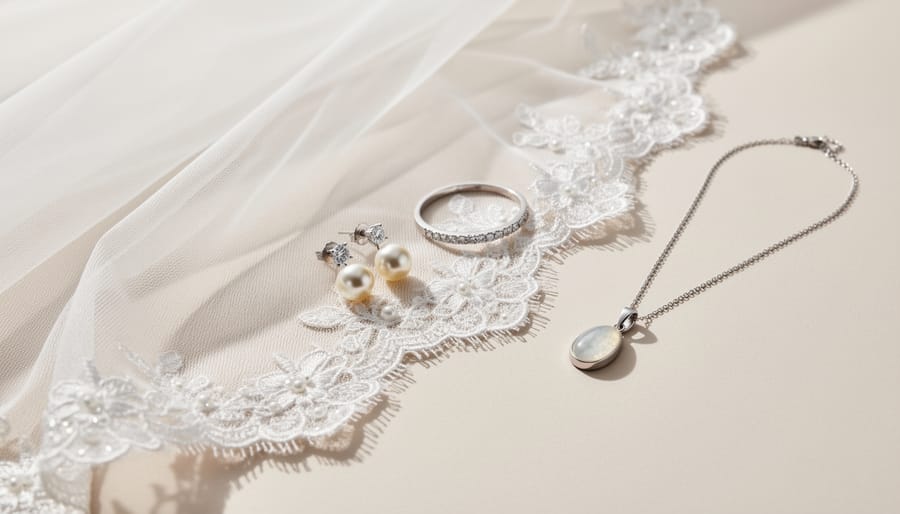
Step 3: Layer Complementary Accessories
Now you’re ready to build dimension. With your statement piece chosen, complementary accessories add depth to your look without stealing attention from your simple silhouette.
Match earrings to your neckline. Off-the-shoulder and scoop necklines pair beautifully with drop or chandelier earrings that draw the eye along that clean line. High necklines work best with studs or small hoops that won’t compete for attention. If your dress has a low back, consider a delicate back necklace or skip the necklace entirely and let your earrings do the talking.
Your shoes should suit your dress length and how you move. Floor-length gowns give you freedom to choose comfort over visibility, a chunky low heel or elegant flat works just as well as a stiletto if it makes you feel confident. Tea-length or midi dresses showcase your shoes, so treat them as part of the overall aesthetic.
Jewelry follows a simple rule: delicate pieces for clean, unadorned necklines; bolder statements only if your dress is truly minimal everywhere else. A simple chain bracelet, a family heirloom ring, or a subtle hair pin can feel more authentically you than matching sets that look borrowed.
The goal isn’t perfection. It’s layering pieces that make you feel like the most confident version of yourself, where every accessory has earned its place in your look.
Step 4: Consider Optional Transformative Extras
Transformative extras are game-changers for simple wedding dresses because they let you create multiple looks from one gown. An overskirt transforms a sleek column dress into a ball gown silhouette for your ceremony, then removes for easier movement at the reception. Detachable sleeves turn a strapless bodice into a long-sleeved look, perfect for Canadian brides navigating cooler weather or religious venue requirements. You get the versatility you need without compromising the clean lines you love.
Bows and scarves offer subtle drama that honors minimalist aesthetics. A dramatic bow attached at the back waist adds a focal point without competing with your dress’s silhouette, while a silk scarf draped over your shoulders photographs beautifully and provides light coverage for outdoor Canadian ceremonies. These pieces feel personal because you choose when and how to wear them.
What makes these extras truly empowering is the control they give you. You’re not locked into one look for the entire day. Want ethereal elegance for photos, then streamlined sophistication for dancing? Detachable elements make that shift effortless. They also ease decision-making anxiety, you don’t have to choose between two styles you love. You can have both, tailored to different moments of your celebration.
Step 5: Balance and Refine Your Overall Look
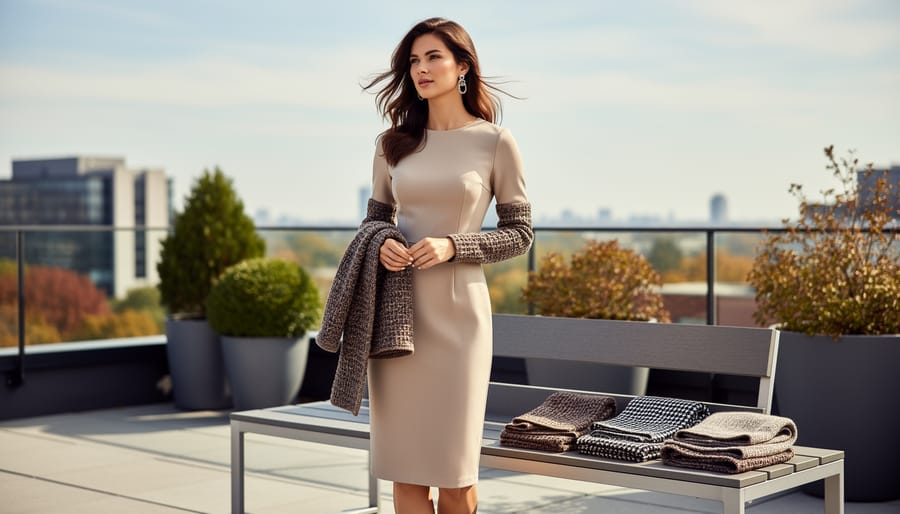
Once you’ve layered your accessories, step away from the mirror and take an honest look at the complete picture. Your simple dress should still be the star, accessories are there to enhance, not overshadow. Check that nothing feels too heavy or cluttered against the clean lines of your minimalist silhouette. If you chose a cathedral-length veil edged in lace, does it complement your off-the-shoulder neckline without competing with your jewelry? If you added an overskirt, does it flow naturally with your dress’s draping?
Now comes the movement test, and it’s non-negotiable. Walk across the room. Sit down. Lift your arms as if greeting guests or holding your bouquet. Bend slightly, turn, dance a little. Do your shoes pinch? Does your headpiece shift? Can you move freely, or are you suddenly aware of every accessory? Comfort isn’t a compromise, it’s essential. You’ll wear this look for hours, through ceremony, photos, dinner, and dancing.
Finally, trust your gut. Does this feel like you, or does it feel like you’re wearing a costume? Authenticity shows. If something feels off, it probably is. Remove one piece, try a simpler option, or swap in something that makes you feel more confident. The right balance is when you look in the mirror and see yourself, just elevated, empowered, and ready to celebrate your day exactly as you are.
How to Know You’ve Got It Right
You’ll know your accessorized look is right when you catch yourself smiling in the mirror. The feeling goes beyond simply liking what you see, it’s a genuine sense that this is you, elevated for your wedding day. Your dress silhouette should still read as beautifully simple and uncluttered, with each accessory feeling like an intentional choice rather than something you added because a wedding checklist said you should. When you walk, sit, and move, everything stays comfortably in place. You’re not tugging at jewelry, worrying about a slipping veil, or feeling weighed down.
Another sign you’ve achieved the right balance is that people notice you first, not your accessories. When you show photos to trusted friends or family, they should comment on how radiant and like yourself you look, rather than focusing only on individual pieces. The look should photograph well from multiple angles, maintaining its elegance whether you’re facing the camera or turned to show the back of your dress. Just as you might have learned while getting dress code decoded for other important events, the goal is coherence and confidence.
Once you’ve confirmed your styling choices feel right, schedule your final dress fitting with all accessories present. Plan your hair and makeup around these pieces, your hairstylist needs to know about that cathedral-length veil or dramatic headpiece, and your makeup artist should understand the overall vibe you’ve created. Then trust yourself. You’ve done the thoughtful work of creating an accessorized look that honors both the minimalist elegance of your gown and your personal style.
Common Questions Canadian Brides Ask About Accessorizing Simple Dresses
How do I accessorize for Canadian weather without losing elegance?
Layer thoughtfully with beautiful wraps, faux fur stoles, or detachable sleeves that complement your dress rather than hide it. For outdoor ceremonies in cooler months, a cathedral-length veil edged in lace paired with soft tulle elements can add warmth and romance, while overskirts offer versatility you can remove for indoor receptions.
Can a simple dress work for a formal wedding?
Absolutely, minimalist silhouettes are perfectly suited to formal celebrations when styled intentionally. The clean lines of simple wedding dress designs like off-the-shoulder silhouettes and minimalist scoop necklines create space for statement jewelry, dramatic headpieces, or elegant veils that elevate the formality while keeping the look refined.
How many accessories are too many?
When your accessories compete with each other or overwhelm your dress silhouette, you’ve crossed the line. A more minimal gown can have more room for accessories, but the key is choosing pieces that work together, typically one statement piece anchored by complementary supporting elements that enhance rather than distract.
When should I book a dress consultation for accessory advice?
Schedule your consultation after you’ve chosen your dress but before finalizing accessories, ideally three to six months before your wedding. This timing gives you space to explore options, experiment with different looks, and feel authentically you rather than rushing decisions close to your date.
These questions reflect what comes up most often in styling appointments with Canadian brides. The weather question is unique to our climate, where you need practical solutions that don’t compromise your vision. The formality concern comes from brides who worry minimalist means casual, when in reality clean draping and low backs can look incredibly sophisticated with the right styling. And the “too many” question gets at the heart of accessorizing simple dresses, it’s about intentional choices, not filling every space. Trust your instincts, try everything on together, and remember that your comfort and confidence matter more than following any formula.
Accessorizing your simple wedding dress isn’t about following rules, it’s about discovering what makes you feel authentically beautiful. The minimalist elegance of 2026 trends gives you a rare gift: freedom to personalize without constraints. You’ve chosen a dress that celebrates you, and now you get to build a look that honors both that choice and your individual style.
Trust the process you’ve worked through. The balance you’ve created between your dress silhouette and your accessories reflects your vision, not someone else’s. If you’re feeling uncertain or want expert eyes on your styling choices, personalized dress consultations can offer the guidance and reassurance that empower confident decisions. Your wedding look should feel like the most elevated version of yourself, comfortable, confident, and completely you.